
For machine shops, fabricators and finishers
A buyer wants the spec sheet. Make it easy to find.
A buyer or an engineer looks you up before they send a drawing, and they read the page like a spec sheet: what you can make, on which machines, to what tolerance, with which certifications, and how fast you quote. Your site has to answer those, honestly and at a glance. We build the whole site before you pay anything.
See the looks
Open one. They are all live.
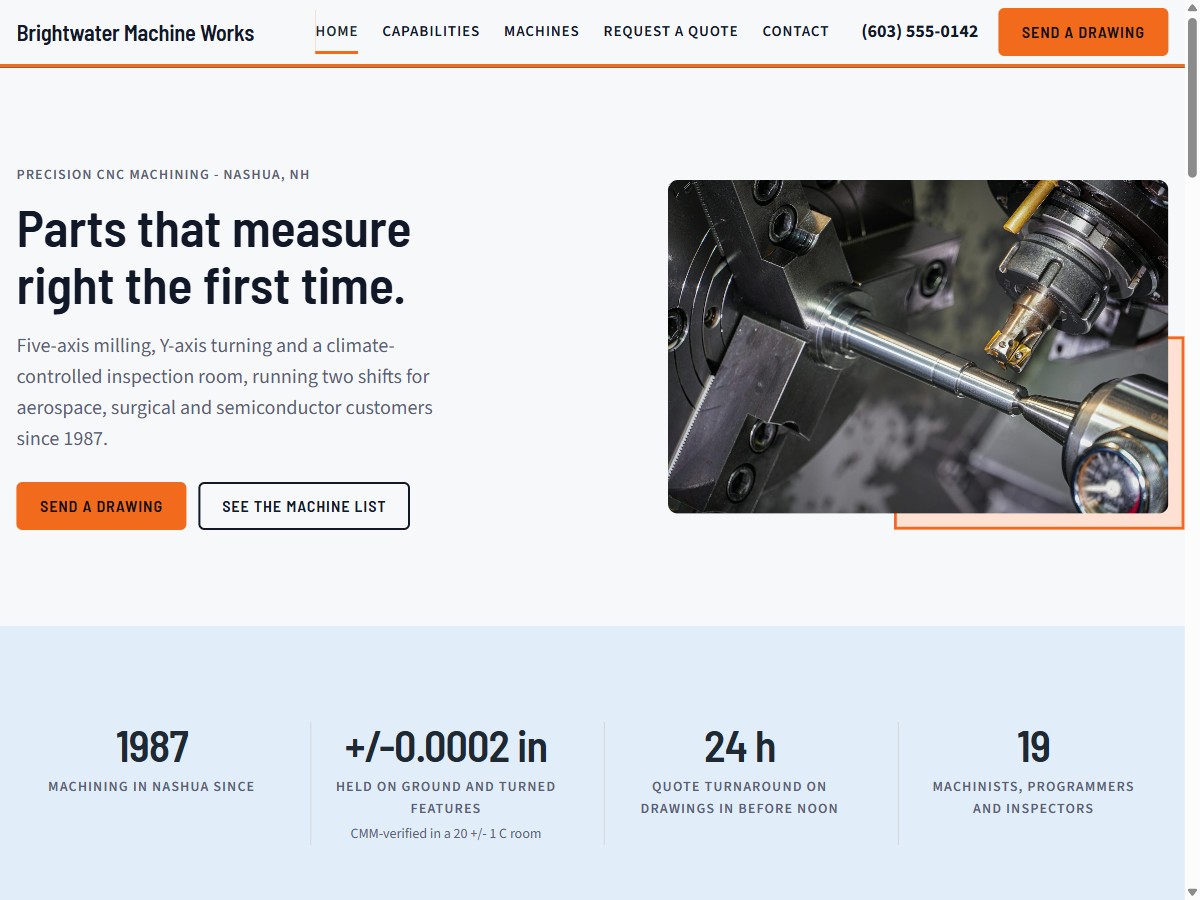 Example site · CNC machining
Five-axis machining, a machine list and an inspection room, for a precision shop. Dark, sturdy and no-nonsense.
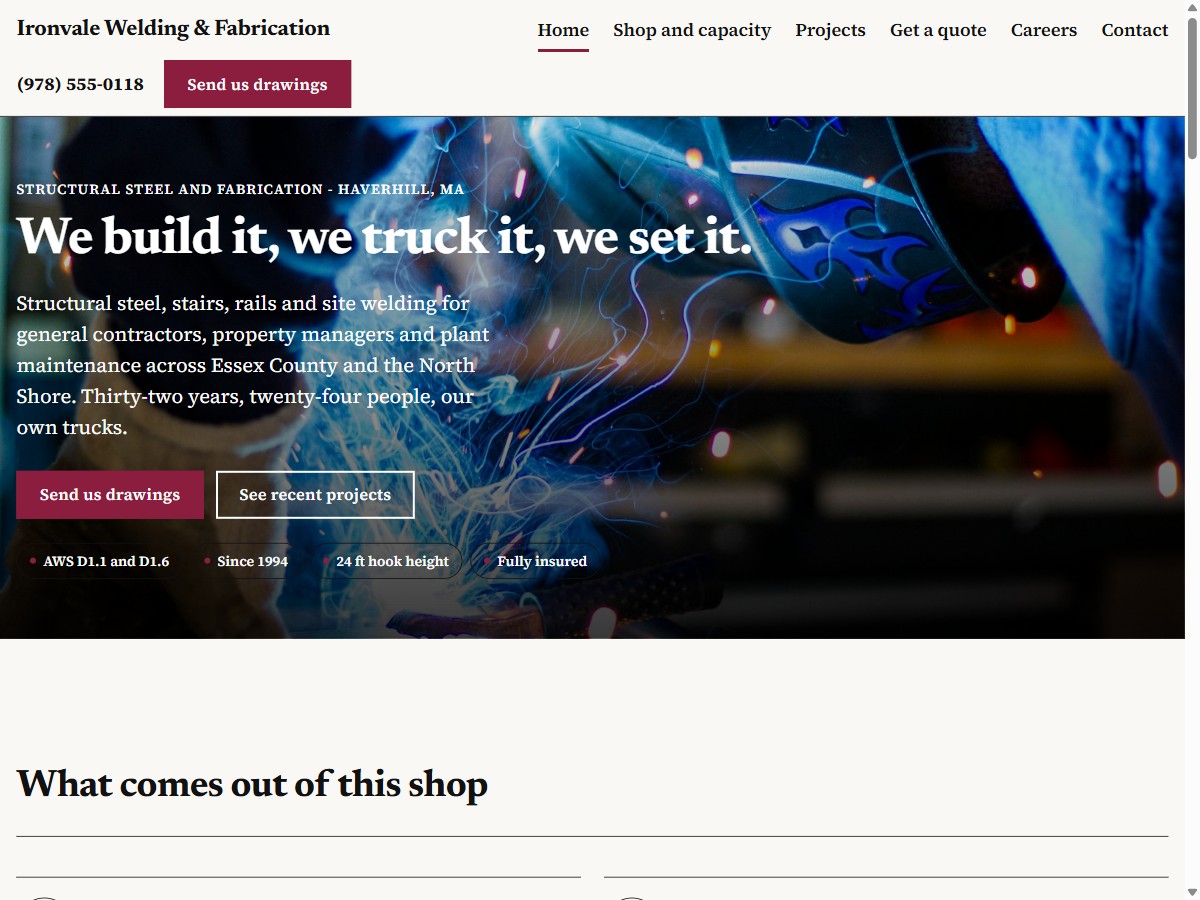 Example site · Steel fabrication
Structural steel, stairs, rails and mobile welding, with the shop's capacity and a send-us-drawings page.
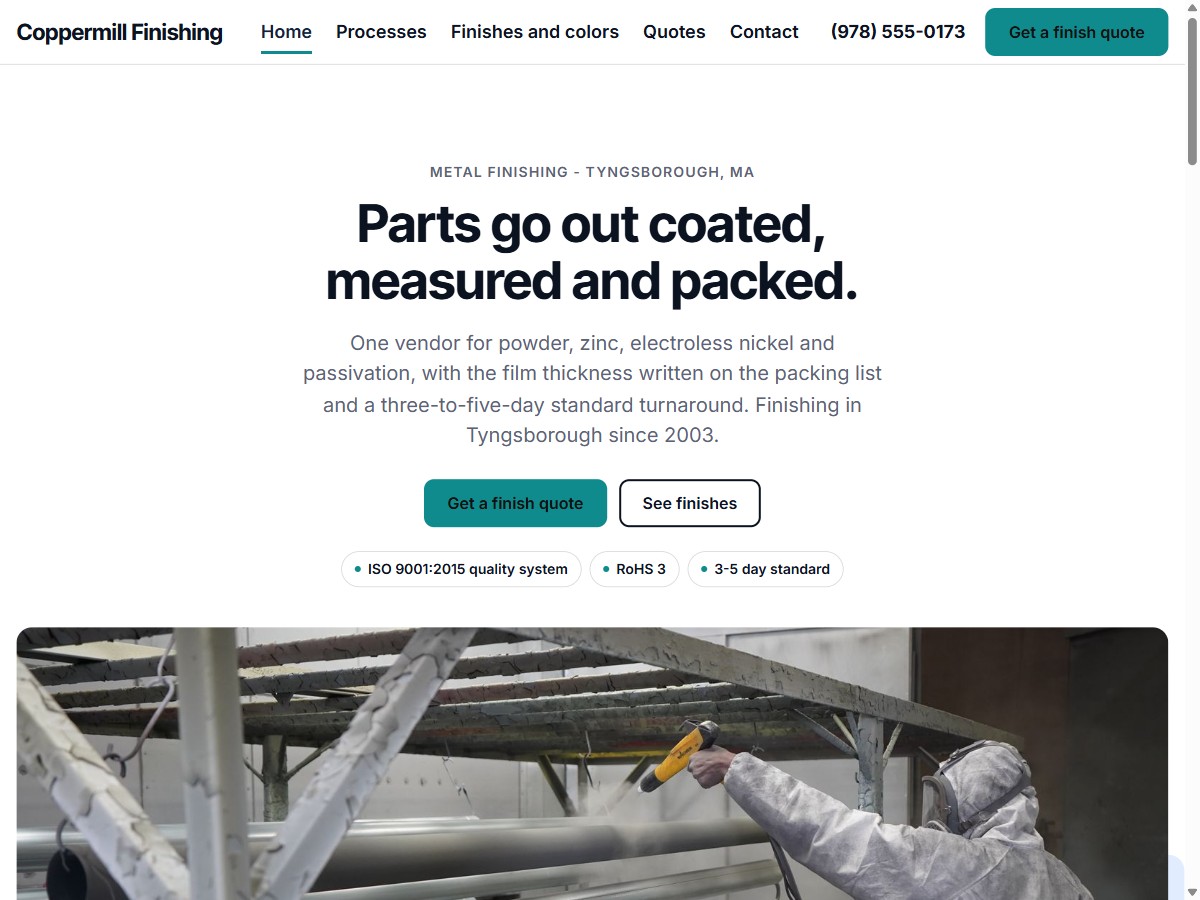 Example site · Metal finishing
Powder coating, zinc plating, electroless nickel and passivation, with the processes and finishes laid out.
What a buyer checks
Four things an engineer looks for on a shop's site.
What can you make?
The processes and materials you really run, named plainly. Brightwater Machine Works lists its milling, turning and inspection. Ironvale lists structural steel, stairs, rails and site welding.
On what equipment, to what standard?
A machine list, the capacity of the shop and the certifications you hold. These are the lines a buyer copies into a vendor form, so they should be easy to copy.
How fast, and how do I ask?
Turnaround stated as a number of days or a time of day, and one clear place to send a drawing or a request for a quote.
Is it a real shop?
A real address, photographs of the floor and the people, and the year you started. Coppermill Finishing shows its building and its processes.
A spec sheet that sells
Three shops, three ways to lay the page out.
Lead with the parts you hold to a tolerance
A precision shop sells accuracy. The page leads with what it holds, how it checks it and what it runs on. Brightwater's example shows a machine list and an inspection room, with a drawing a click away.
- Puts first: tolerances, materials, machines, inspection
- Leaves out: a stock-photo handshake
Lead with what leaves the shop, and how
A fabricator sells capacity and reliability. Ironvale's example shows structural steel, stairs, rails and site welding, the cranes and trucks it owns, its welding certifications and recent projects.
- Puts first: what you build, what you lift, who you have built it for
- Leaves out: a long history before the first fact
Lead with the processes and the turnaround
A finisher sells one place for several processes and a dependable time. Coppermill's example lays out powder coating, zinc plating, electroless nickel and passivation, the finishes and colors, and a standard turnaround.
- Puts first: the processes, the turnaround and the quality system
- Leaves out: a finish list with no way to ask for one
Three shops, three pages
What each example puts first.
| Brightwater | Ironvale | Coppermill | |
|---|---|---|---|
| The business | CNC machining | Steel fabrication | Metal finishing |
| The first screen says | Parts that measure right | We build it, truck it, set it | Parts go out coated and measured |
| The trust line | Inspection room, CMM | Welding certifications | Quality system, RoHS |
| The next step | Send a drawing | Send us drawings | Get a finish quote |
| The buyer | Aerospace and surgical | Contractors, plant maintenance | Manufacturers |
All three are example sites with free stock photographs. Every name, certification and number on them is made up.
How a quote request works
A page that says exactly what to send.
From a search to an RFQ
The request arrives with what you need to quote.
Shops lose time chasing a missing material or quantity. A short request page that asks for them once saves the first round of emails.
- They find the shopBy a search for a process and a town, or from a referral.
- They see if you fitCapabilities, equipment and certifications, in a few lines.
- They ask for a quoteA short request that asks for the material, quantity and timing. You choose the questions.
- You reply with a quoteFrom your inbox, with the price and the lead time you stand behind.
What we set up for you
Everything below comes with your site.
-
Capabilities and equipment
What you make and on what, laid out so a buyer can copy it.
-
Certifications
Your certifications and quality system, shown as you give them to us.
-
A request-for-quote page
See custom formsIt asks for what you need to quote and lands in your inbox.
-
Changes by email
A new machine or a new certification is on the page within a day.
From the blog
Read more.
- Who owns your website? Domain, hosting and words, explainedThree things people mean by "my website", and who holds each one.
- Website design and hosting: bundled or bought separately?What you pay for, and who fixes it when something breaks.
- What a Storefront Checkup looks atA written review of your website and Google listing.
Plainly
Some honest things.
The shops are made up
Brightwater, Ironvale and Coppermill are example companies. Their equipment, tolerances, certifications and phone numbers are invented, with free stock photos.
Certifications are yours to state
We place the certifications, standards and numbers you give us, exactly as written. We do not check them, and we will not add one you do not hold.
Drawings can be sensitive
A request form is not built to hold export-controlled or confidential technical data. Agree how drawings are shared with each customer, in the tools you already use.
Questions
What shop owners ask first.
Should I list my machines?
Usually, yes. Buyers and engineers look for a machine list. List what you run, not what you wish you had.
Where do my certifications go?
Near the top, as a short line or a row of logos, exactly as you give them to us. We do not check them.
Can customers send drawings through the site?
The request page tells them what to send and where. How drawings are shared, and whether any are sensitive, is for you to agree with each customer.
Can I show my turnaround time?
Yes, if you can stand behind it. A stated lead time, like Coppermill's three to five days, helps a buyer decide.
Can my capability statement be on the site?
Yes. A PDF opens right on the page in a built-in viewer, with no download.
We serve both homeowners and companies. How do we split the site?
A page for each kind of customer, in their words. See roofers and home-service trades for the homeowner side.
What does it cost?
$99 a month, month to month, no design or setup fee. See pricing.
Tell us what you make and who buys it.
We build a real site and email you the link before you pay anything.