
Guides · October 23, 2026
Who owns your website? Domain, hosting and words, explained
Your website is four things, and each can belong to someone different. How to check who holds your domain, hosting and content in ten minutes, and what to ask for.
Ask a business owner who owns their website and most will say "I do, I paid for it." Then the person who built it stops answering email, and it turns out the answer was more complicated.
"Your website" is really four things, and each one can belong to someone different. Here is how to check who holds each, today, in about ten minutes.
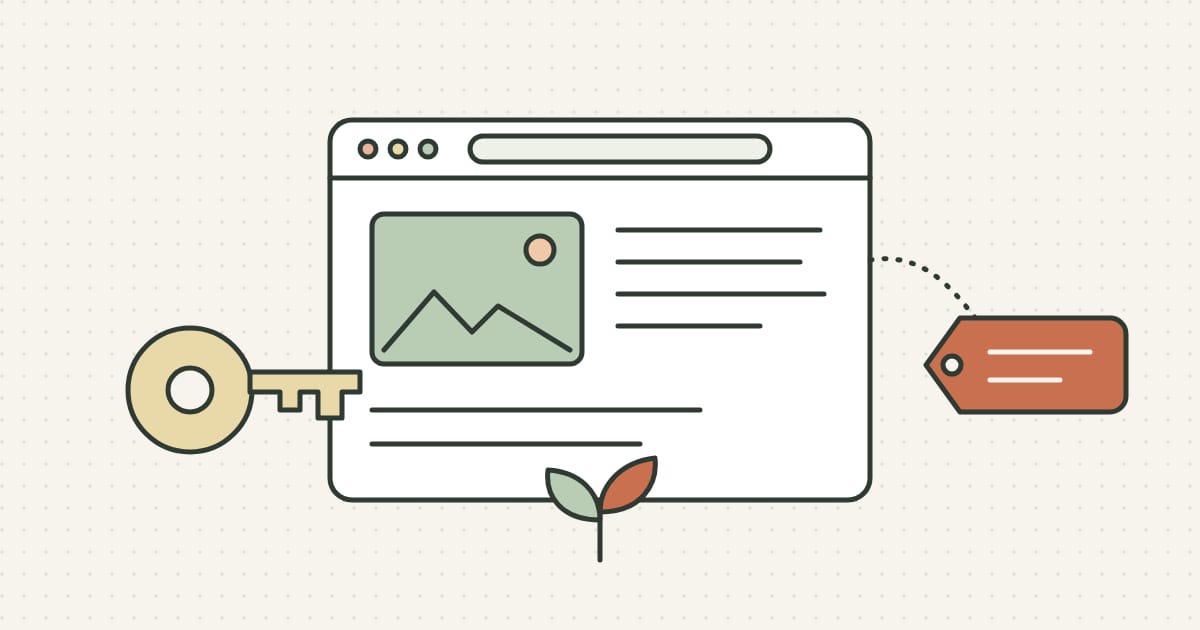
The four things that make up "your website"
- The domain. Your address, like yourbusiness.com. This is the one that matters most, because it is how customers, Google and your email find you.
- The hosting. The computer the site runs on. Somebody pays for it every month or every year.
- The words and photos. Your menu, your prices, your story, the pictures of your work.
- The design and the code. How the site looks and the software that draws it.
You can lose the last two and recover in a week. Lose the domain and you lose your address, and often your email with it.
Check your domain first
Go to ICANN's lookup tool and type in your address. Look at two lines:
- Registrar: the company the domain is registered with.
- Registrant: the person or business the domain belongs to. Often this is hidden for privacy, which is normal.
Then log in to that registrar, or ask whoever set it up for you. You are looking for one thing: the domain should be registered in your name or your business's name, with an email address you can read. If it is in your designer's name or their agency's account, ask them to move it into an account you control. It is a routine request, and ICANN explains your rights as a domain holder in plain language.
Then the hosting
Ask one question: if the person who built this disappeared tomorrow, who would keep paying for the hosting, and who could log in? If the answer is "nobody" or "I don't know", write down the hosting company's name now, while it is easy to find out.
Your words and photos
You almost always own what you wrote and the photos you took. The question is whether you could get them back. A quick test: could you copy every page of text and save every photo by tomorrow if you had to? If the site is locked inside an account you can't open, keep your own copy of anything you can't easily recreate, like your best project photos.
The design and the code
This is the part people argue about, and it matters least. Some contracts give you the design files; many don't. Builders like Wix or Squarespace generally don't let you take the code elsewhere. That is fine, as long as you hold the domain and your content. A new site can be built from those.
If your designer won't cooperate
Stay polite and put it in writing. Ask for three things: the domain moved into your account, a copy of your text and photos, and the hosting login or a date the hosting ends. Most people say yes. If the domain is registered in your name, the registrar can help you even without the designer. If it isn't, that is the one fight worth having.
What we do
At PageTend, your domain is registered in your name, not ours. Your words and photos are yours. If you ever leave, the domain goes with you and we send you every page of text and every photo. You don't need your old site's password to switch to us, either: we build your new site from your public pages, and only need your domain when you're ready to go live. Here is exactly how switching works.
Everything on your site, from custom forms that deliver to your inbox to events and calendars, comes with it. See every feature included.
Not sure where your site stands? Tell us your address and we'll build you a new one to look at, before you pay anything.
Written by Frank Yang, founder of PageTend. He has written software for 30 years and builds PageTend with AI, so small businesses never have to think about their websites.
Rather not do any of this yourself?
We build your website, keep it current and look after your Google listing. You email us; we make the change.
More posts
 Closed for the season? Keep your Google listing honestA garden center, a fishing charter or a holiday attraction can close for months and still be found every day. Here is how to set your Google listing for the off-season, and get it ready to reopen.
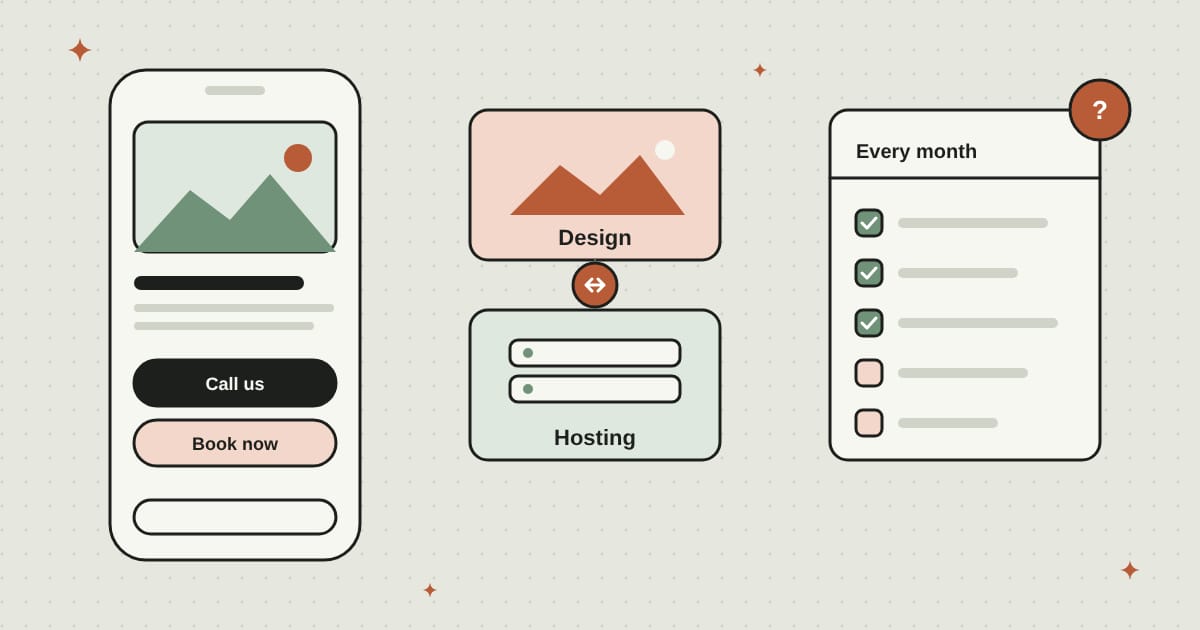 Website design and hosting: bundled or bought separately?Builder, designer plus host, or one company that runs it all? The price tags differ, but the real question is who does the work after launch day.
 One website, every language your customers speakA PageTend website can speak English, Chinese and Spanish, with a language switch in the header, its own address for each language, and every date, button and form switching along.