
Features · October 20, 2026
One website, every language your customers speak
A PageTend website can speak English, Chinese and Spanish, with a language switch in the header, its own address for each language, and every date, button and form switching along.
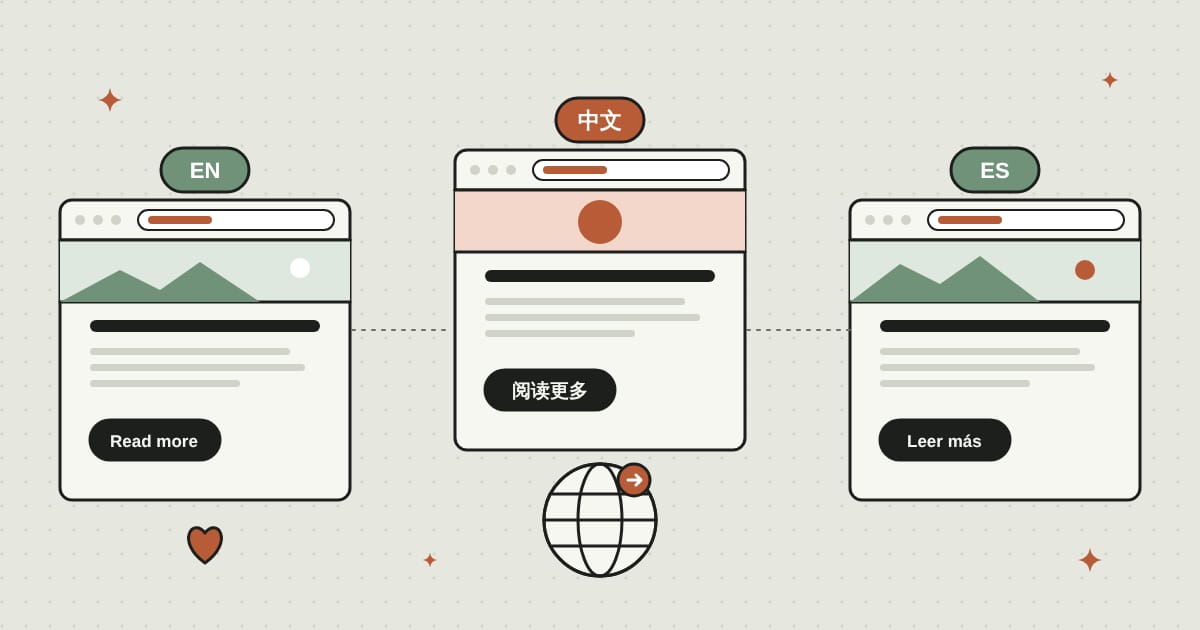
Have you ever been asked, "Do you have this in Chinese?" Or Spanish? If you run a restaurant, a shop, a market, a community group or an expo, you probably have. And if your website only speaks English, the honest answer is no.
A PageTend website can speak all of them. One site, one layout, every language.
A switch in the header
Every page has a small language switch in the header. A visitor taps it, and the whole page turns into their language: the headline, the text, the menu, the buttons. They can switch back at any time, and the page they were on stays the page they are on.
Nothing left half in English
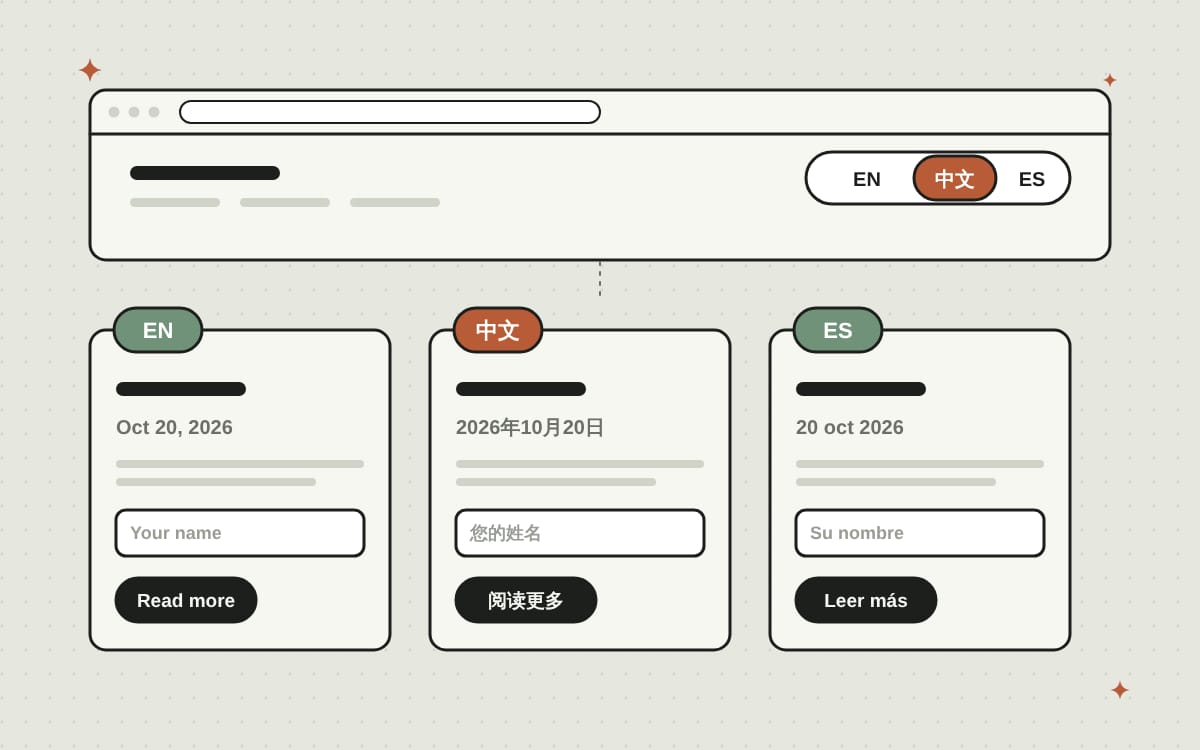
The usual way a "translated" site goes wrong is the leftovers: a Chinese page with an English date, or a Spanish form with "Submit" on the button. On a PageTend site the small things follow the language too. Dates, buttons, and form labels and messages all switch along, so a visitor never lands in the middle of a sentence they cannot read.
Each language gets its own address
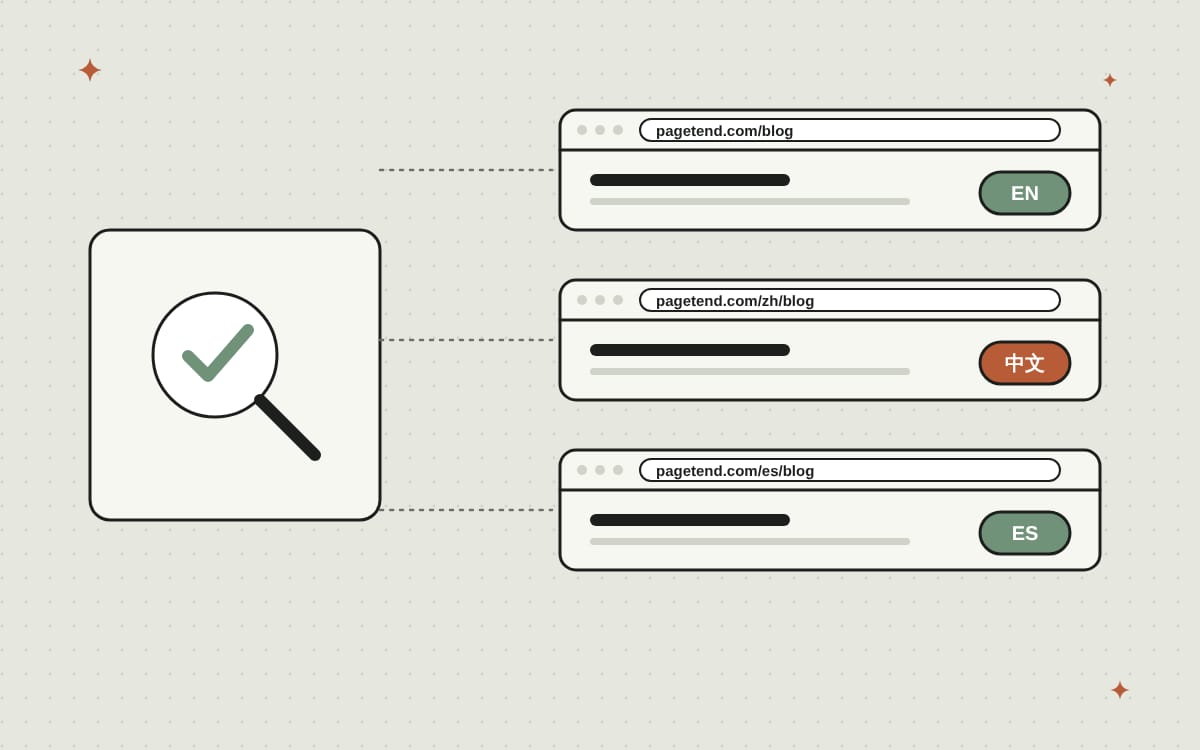
Every language lives at its own address. Your English blog is at /blog, the Chinese one at /zh/blog and the Spanish one at /es/blog. That matters for two reasons. People can share a link that opens in the right language, and Google can see each version as a real page, so it sends every visitor to the one they can read. A language switch hidden behind a script cannot do that.
We write it with you
We do not run your site through a translation tool and walk away. We write each language with you, then check it before it goes live, because a menu, a price or a sign-up form has to be right in every language, not just roughly right. Nothing is published unchecked.
Start small, add more later
You do not need to decide everything today. Start with the languages your customers actually use, and add another one later. The layout stays the same, so a new language is more words, not a redesign.
Who is it for?
Restaurants and shops with regulars who read another language. Community groups, markets and expos that invite the whole neighborhood. Clinics, tutors, and any business that has been asked "do you have this in…?" and wished the answer were yes.
See it working
We built a small demo that clicks through a sample site in English, Chinese and Spanish: pagetend.com/features/multilingual. The market, its posts and the names in it are made up, but the switch, the dates and the addresses work the way yours would.
Multilingual comes with your PageTend website at no extra charge. If you would like your site to speak more than one language, tell us which ones and we will take it from there.
Written by Frank Yang, founder of PageTend. He has written software for 30 years and builds PageTend with AI, so small businesses never have to think about their websites.
Rather not do any of this yourself?
We build your website, keep it current and look after your Google listing. You email us; we make the change.
More posts
 Closed for the season? Keep your Google listing honestA garden center, a fishing charter or a holiday attraction can close for months and still be found every day. Here is how to set your Google listing for the off-season, and get it ready to reopen.
 Who owns your website? Domain, hosting and words, explainedYour website is four things, and each can belong to someone different. How to check who holds your domain, hosting and content in ten minutes, and what to ask for.
 Website design and hosting: bundled or bought separately?Builder, designer plus host, or one company that runs it all? The price tags differ, but the real question is who does the work after launch day.