
Guides · October 22, 2026
Website design and hosting: bundled or bought separately?
Builder, designer plus host, or one company that runs it all? The price tags differ, but the real question is who does the work after launch day.
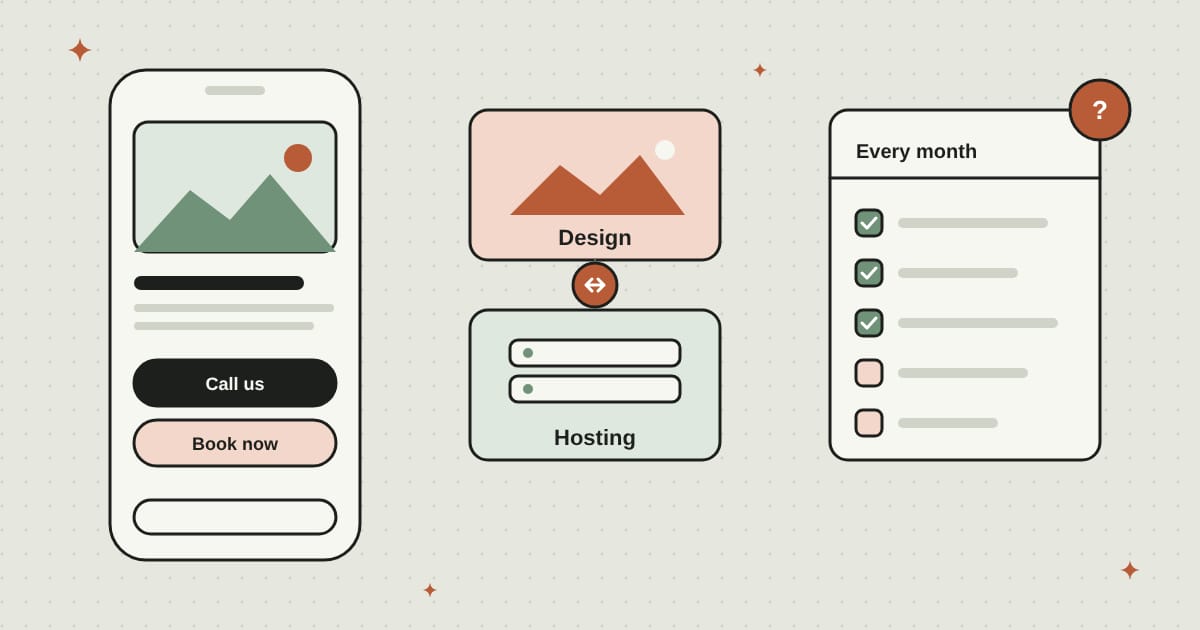
There are three common ways to get a small-business website. You can build it yourself on a website builder. You can hire a designer and buy hosting separately. Or you can pay one company to design it, host it and run it.
The price tags look very different. The real difference is one question: who does the work after launch day?
A website is a job, not a thing you finish
A website builder is a good tool. For plenty of people it is the right answer: pick a template, drop in your words and photos, and you are online by the weekend. The trouble is what comes after the weekend. A website is a small job you now have, every month, for as long as you want customers to find you. Most owners find out about it one piece at a time, usually when something goes wrong.
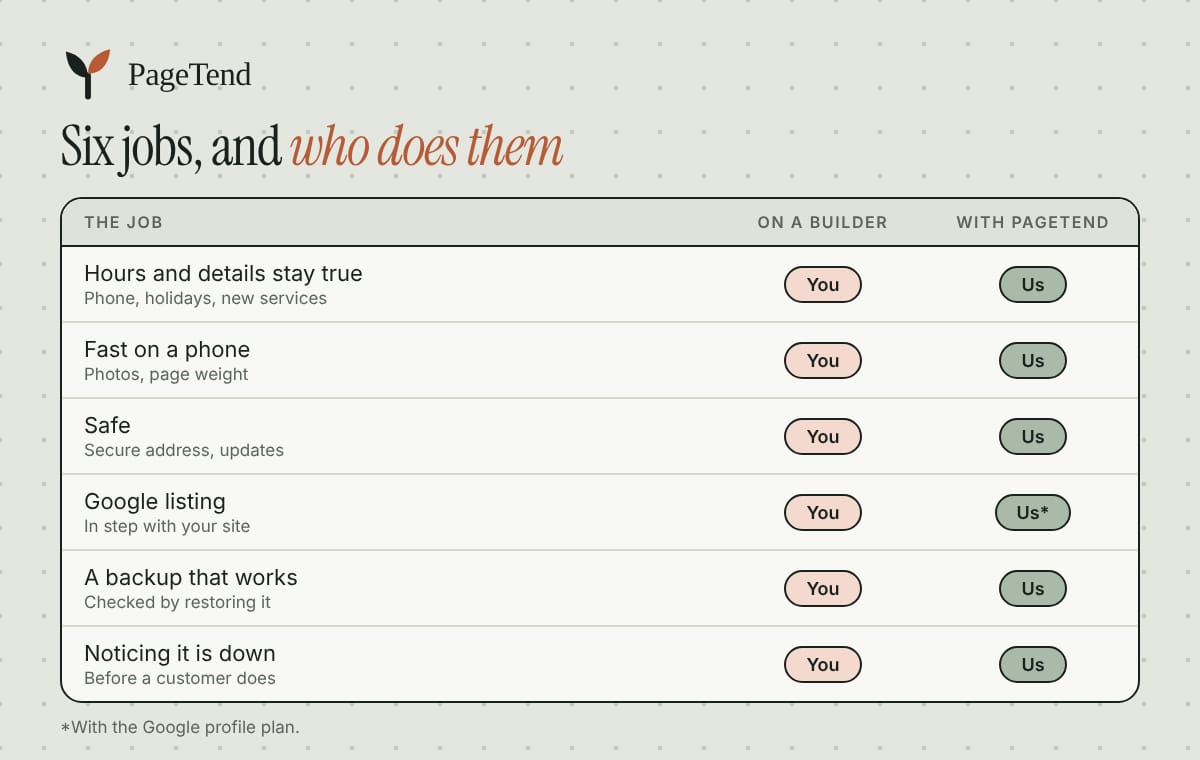
- Keeping it true. Hours change. A holiday comes. A site that says you are open when you are closed costs you the customer and their trust.
- Keeping it fast. A photo that was fine at upload gets heavy, and a slow page on a phone loses the visitor before they read a word.
- Keeping it safe. The padlock in the address bar depends on a certificate that has to be renewed. Anything with plugins has updates to apply.
- Keeping it findable. Google reads your site and your Google listing, and the two have to agree. Anyone can suggest an edit to your listing, and some of those edits are wrong.
- Keeping a copy. A backup you have never tested is a hope, not a backup.
- Keeping it up. Sites go down. The question is who notices first: you, or a customer who could not get through.
None of these is hard. Together they are an evening a month that most owners never schedule.
Three ways to buy a website
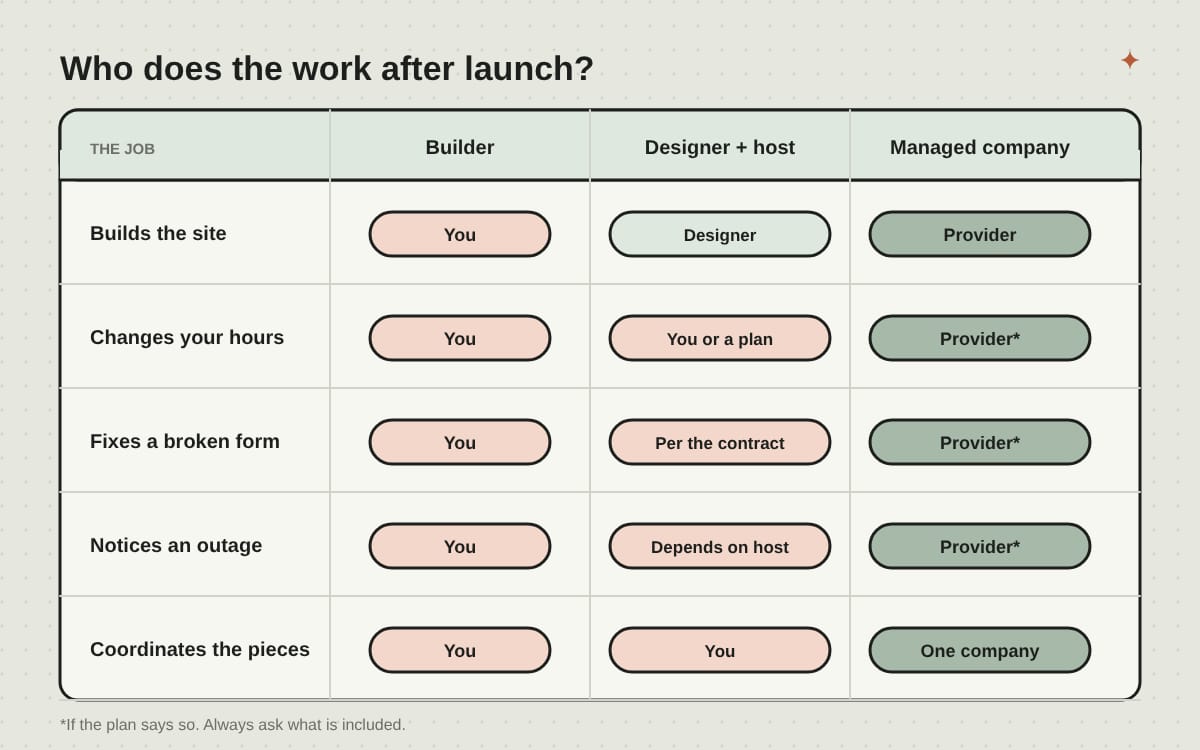
Notice how often the answer is "it depends on the plan". Hosting makes your site available online. It does not mean someone will update your holiday hours, replace old photos or look into a broken form. A bundle can leave you doing plenty yourself, and a designer with a good maintenance agreement can work very smoothly. The contract decides the workload, not the package name.
Who fixes it when your contact form stops working?
This question separates the three. Customers can open your website, but the inquiry form quietly stops delivering. The page loads, so the host sees no outage. The cause could be the form software, a mail-delivery service, an expired connection or the inbox that receives the messages.
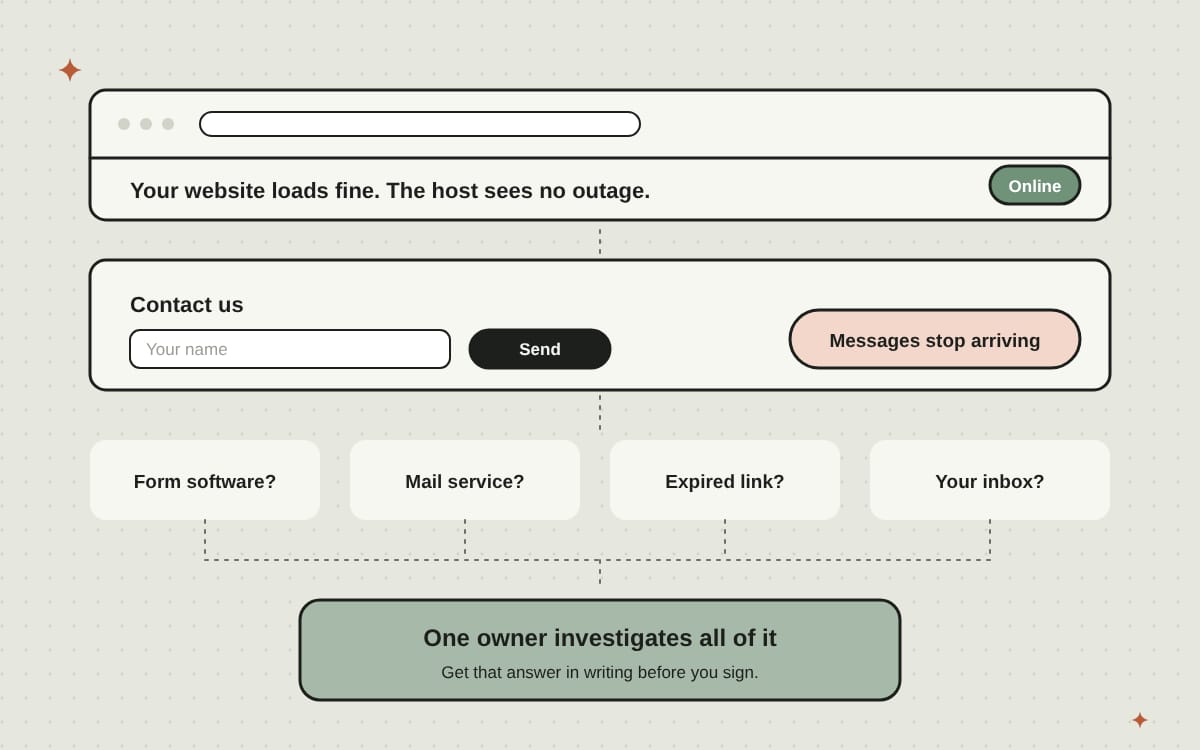
With separate vendors, the host says the server is fine, the designer says it is not their code, and you become the person forwarding messages between companies. With one provider you have one place to start, but only if they take responsibility for the whole problem, outside services included. Before you sign with anyone, ours included, ask: "If customers can open my website but cannot send an inquiry, who investigates, and what might I be charged?"
Four more questions to ask before you sign
- What counts as an update? If someone advertises unlimited updates, ask whether a redesign or a new integration is included.
- How fast, exactly? Acknowledging your request within a day is not the same as publishing the change within a day.
- What is not in the price? Domain registration, business email and third-party subscriptions are often separate. Have them listed.
- What do I take with me if I leave? Your domain, your hosting account and your website files are three different things. Ask whose name the domain is registered in and, in writing, what you would receive: text, photos, files. "No contract" does not say whether migration help costs extra.
Compare the full cost, not just the hosting bill
Add up what it costs to keep the same scope running for one year and for three. Here is a worked example for the separate route. These are assumed figures to show the arithmetic, not a market average or anyone's actual quote: a $2,400 build, $30 a month hosting and $60 a month maintenance comes to $3,480 in year one and $5,640 over three years, before any paid software or content-update charges.
PageTend is $99 a month with no design fee: $1,188 over 12 months and $3,564 over 36 months at an unchanged rate, before optional add-ons and applicable taxes.
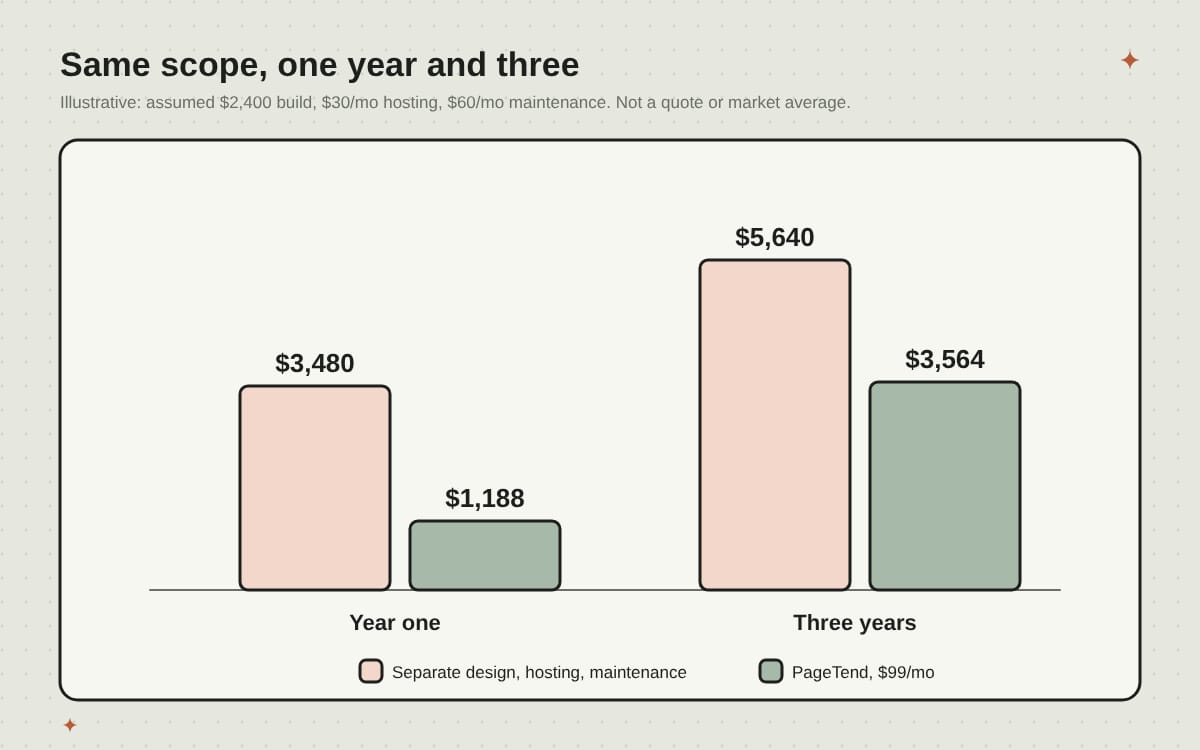
A comparison only means something if both offers cover the same pages, features and ongoing work. A lower price for a simpler site is not an equivalent offer. And count your own time: if you will brief vendors, check their work and chase problems, those hours are part of the cost. For the wider picture, see our guide to what a small-business website costs.
What "managed" means at PageTend
A managed website is the same website with the job handed to someone else.
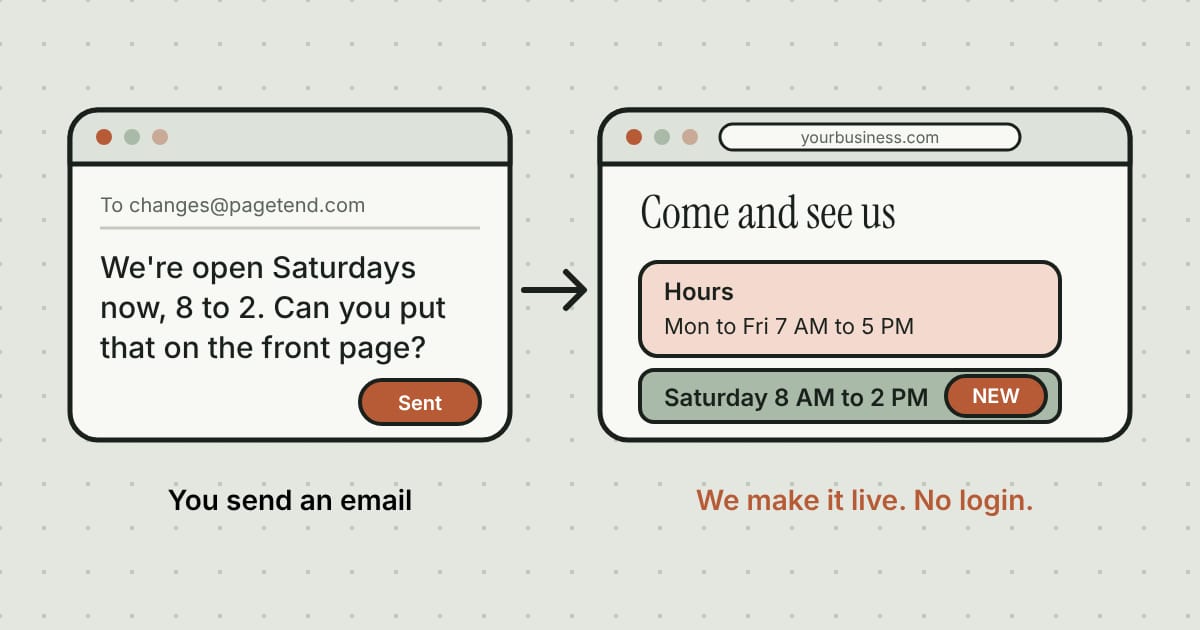
- You send a message. Email, text or a voicemail at changes@pagetend.com: "We're open Saturdays now, 8 to 2. Can you put that on the front page?" No login, no dashboard, no ticket number.
- We make the change. Small changes are done within one business day, and you get a note back saying it is live.
- We do the rest without being asked. We keep the photos light, keep your secure address renewed, fix dead links, and keep a monthly backup that we check can be restored. With the Google profile plan we also keep your listing in step with your site and undo wrong edits.
- We watch it. Every live site is checked every five minutes. If one is down, we find out before you do, and we fix it.
There are no plugins to update, because there is no editing system on your site for anyone to break into. The site you see is published from our side, and visitors are served a finished page from servers close to them.
Future Envision's site was down when they came to us. Two days later it was back on their own domain, rebuilt in English and Chinese. Vivian at Future Envision said:
We do not have any technical staff or anyone who understands HTML/SEO/etc, this process has completely freed us and allowed us to focus on what we do best.
Nothing about that needed a better tool. It needed the job to belong to someone else.
When a builder or a separate designer is the right call
- You enjoy it and will really do it. If you will give it an hour a week, a builder is cheap and good. Nobody will care about your site more than you.
- You need something unusual. A specific platform, unusual integrations or infrastructure your own team controls can justify a custom build with an agency.
- You already have a trusted designer and a dependable maintainer. Then responsibility is already assigned, and separate billing is not a problem.
- Your current site works and someone reliably looks after it. Compare the cost and disruption of moving against the problem you are trying to solve. If there is none, stay.
If your honest answer is "I just want it handled", that is what a managed website is for.
What PageTend costs
- $99 a month for the website: design, hosting, secure address, a domain in your name, the changes you ask for, and a monthly report.
- $149 a month with your Google listing run for you as well.
- No setup fee. No contract. Month to month.
- Built-in features such as custom forms, event calendars, more languages and a simple online shop come with the website at no extra charge.
- We build your site first, so you see it before you pay anything.
- Your domain is registered in your name, so it leaves with you. If you ever leave, we also hand you a copy of your site as plain web pages and photos that you can put on any host.
Optional add-ons for a mailing list, a blog, an AI chat assistant and Google review requests are month to month, and we write them so you do not have to.
Quick answers
Is it cheaper to buy design and hosting together? It can be, especially when updates and maintenance are included. A bundle with limited support can cost more once extras are added, so compare matching scope over the same period.
Does a bundle include my domain and business email? Not necessarily. They are distinct services even when one company sells them together. Ask about registration, renewals, mailbox fees and who controls each account.
Will a bundle improve my Google rankings? No. Bundling gives no ranking advantage on its own. What helps is clear service pages, useful content, a fast mobile site and a Google listing that matches it.
Not sure where you stand?
A Storefront Checkup is a written review of your website and Google listing by a real person. It tells you what to fix first, whoever ends up doing the fixing.
Or tell us about your business and we will show you what your site could look like, before you decide anything. If you want one team to build it and run it, PageTend's fully managed website is $99 a month, no design fee, no contract.
Written by Frank Yang, founder of PageTend. He has written software for 30 years and builds PageTend with AI, so small businesses never have to think about their websites.
Rather not do any of this yourself?
We build your website, keep it current and look after your Google listing. You email us; we make the change.
More posts
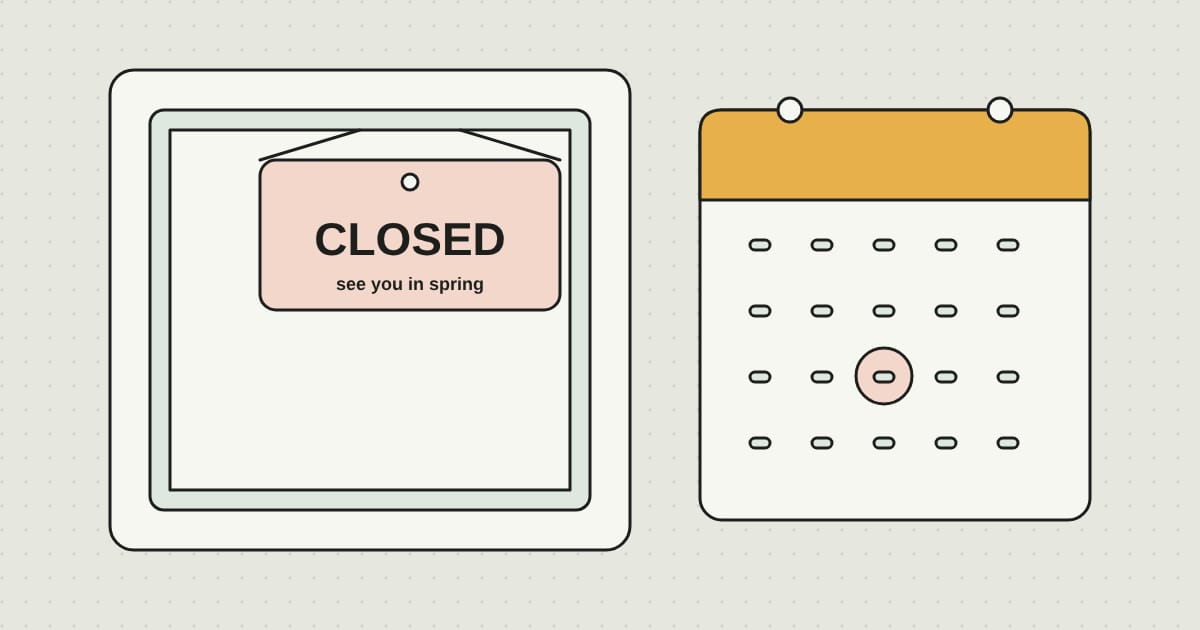 Closed for the season? Keep your Google listing honestA garden center, a fishing charter or a holiday attraction can close for months and still be found every day. Here is how to set your Google listing for the off-season, and get it ready to reopen.
 Who owns your website? Domain, hosting and words, explainedYour website is four things, and each can belong to someone different. How to check who holds your domain, hosting and content in ten minutes, and what to ask for.
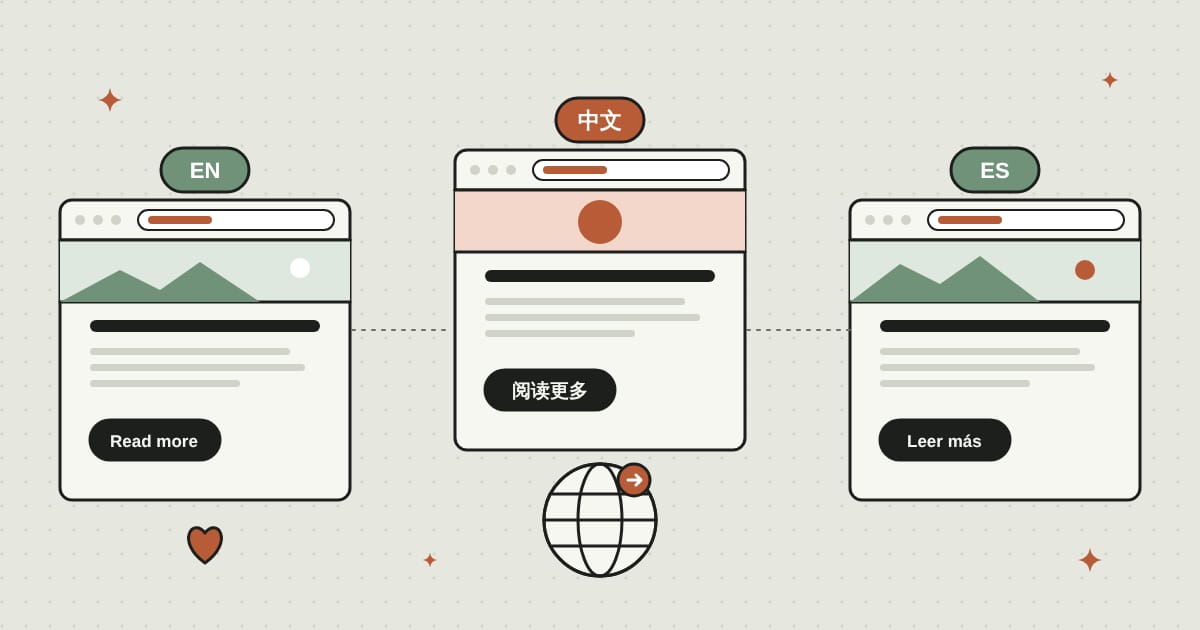 One website, every language your customers speakA PageTend website can speak English, Chinese and Spanish, with a language switch in the header, its own address for each language, and every date, button and form switching along.